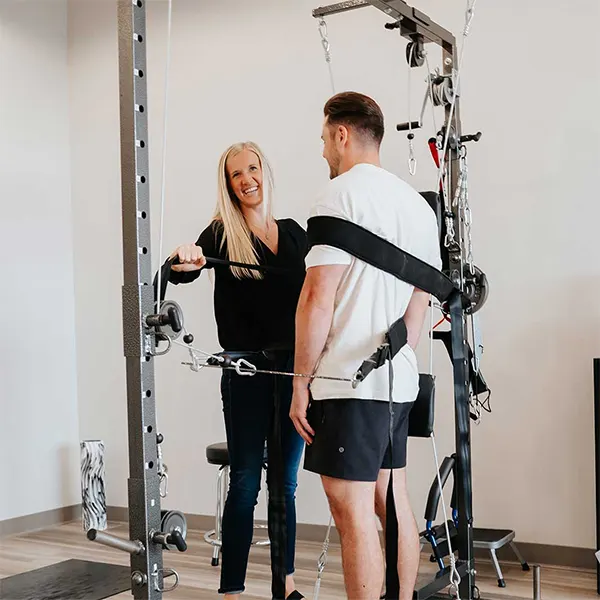

Non-Surgical Spinal Decompression In Fargo, ND
If you’ve been told your options are injections or surgery, there’s a conservative step in between that many people never hear about.
Non-surgical spinal decompression uses a computer-controlled table to apply gentle, precisely calibrated distraction to a specific spinal segment. Where a disc is bulging, herniated, or degenerated, the goal is to reduce the pressure inside that disc and take load off the nerve its irritating.
How Spinal Decompression Works
Your discs liver under near-constant compression. Standing, sitting, and lifting all load them, and by the end of the day they’ve lost measurable height. Discs also have essentially no direct blood supply as they rely on a pumping action driven by movement and load variation to draw in fluid and nutrients. When a segment is compressed and immobile, that pump stops working, and the disc slowly dehydrates.
Decompression targets both problems.
Reducing intradiscal pressure. Controlled distraction lowers pressure within the targeted disc. Reduced internal pressure supports retraction of displaced material away from the nerve.
Restoring the fluid exchange. The cycling of distraction and relaxation over a session acts like a pump, encouraging fluid, oxygen, and nutrients to move back into the disc.
Unloading the nerve. Increasing the space at the level involved directly reduces mechanical pressure on the nerve root producing your leg or arm symptoms.
What makes modern decompression different from old-fashioned traction is the computer control. When the body senses a sustained pull, protective muscles guard and resist. Decompression tables use logarithmic force curves and continuous feedback to apply and release tension in a pattern that bypasses that guarding response, so the force reaches the disc instead of being absorbed by muscle.
Evidence For Decompression
A retrospective cohort study of patients with lumbar disc herniation found that non-surgical spinal decompression was associated with significant reduction in low back pain and a measurable increase in disc height on imaging, with the two changes correlating. A published case series using MRI measurement reported good to excellent clinical outcomes across patients treated for lumbar intervertebral disc lesions, and comparative work has found decompression therapy producing greater improvements in pain, disability, and straight leg raise than general traction.
What Decompression Helps
- Herniated and building discs – lumbar and cervical. See Disc Injury.
- Sciatica – leg pain, numbness, or weakness from lumbar nerve root compression
- Cervical radiculopathy – arm pain, numbness, or tingling from neck nerve compression
- Degenerative disc disease – loss of disc height and hydration of the disc
- Facey syndrome – pain from the posterior spinal joints
- Spinal stenosis – narrowing of the canal or nerve exits, in appropriate cases
- Failed conservative care – back or leg pain that hasn’t responded to other approaches
When Decompression Isn’t Appropriate
We won’t put you on the table if it isn’t right for you. Decompression is generally contraindicated with spinal fusion or certain surgical hardware, pregnancy, severe osteoporosis, spinal tumors or infection, abdominal aortic aneurysm, and cases of significant spinal instability. Your examination and imaging determine if decompression is right for you.
What a Session is Like
You stay fully clothed and lie comfortably on the decompression table, secured with a padded harness system. The table applies and releases tension in a controlled cycle over roughly twelve to twenty minutes. Most patients describe it as a gentle stretch, and many find it relaxing enough that they close their eyes. Some feel noticeable relief during the first session and for others it can be more gradual.
Frequency varies with your presentation, and a typical course runs several sessions per week over several weeks. Decompression is rarely used alone as it works best combined with chiropractic adjustments, [spinal remodeling traction], and therapeutic exercise.
Why we combine Decompression with Curve Correction
This is the piece that distinguishes our approach, and it’s worth understanding.
Decompression addresses the disc that’s currently injured. It doesn’t address why that disc was under excessive load in the first place.
When spinal curves are lost it form a flattened lumbar lordosis, a reversed cervical curve, or a forward head position. This happens when load stops distributing across the spine and concentrates on specific discs. Decompress that disc without changing the load pattern and you’ve relieved the symptom but not addressing the root cause.
That’s why decompression at Peak Spine + Wellness runs alongside Chiropractic Biophysics structural correction. Systematic reviews of controlled trials have documented improvement in lumbar lordosis and low back pain outcomes with CBP methods, and randomized work in the cervical spine has demonstrated improvement in both pain and objectively measured nerve root function following curve restoration. Fixing the disc and fixing the load pattern are two different jobs, and doing both is what makes the result hold.
Frequently Asked Questions About Spinal Decompression
Does Spinal Decompression hurt?
Most patients describe it as a comfortable stretch. Some experience mild soreness after early sessions, similar to after a workout, which typically settles quicky. Tell us if anything is uncomfortable, we can always adjust the force.
How many sessions will I need?
It depends on the severity and duration of your condition. Published protocols commonly run in the range of twenty sessions over several weeks. We’ll give you a specific plan after your exam and imaging review, with clear checkpoints along the way.
Is Spinal Decompression the same as an inversion table?
No. Inversion tables use body weight and gravity to create general, non-specific traction across the whole spine. Decompression applies computer-controlled force to specific segments at a specific angle, with feedback that prevents muscle guarding. They are not compatible.
Will Insurance cover decompression?
Peak Spine and Wellness is a cash-based practice and does not bill insurance. We will be completely transparent about cost before you begin, and we are happy to discuss your specific situation.
Can decompression help me avoid surgery?
Many patients pursue decompression specifically to try conservative care first, and long-term outcome studies comparing surgical and non-surgical management of lumbar disc herniation have found that outcomes tend to converge over one to two years. That said, some conditions genuinely require surgery, and we will tell you if we believe your case needs to be referred out.
Find out if you are a candidate.
Call (701) 532-0823 or schedule online.
References – Restoration of disk height through non-surgical spinal decompression is associated with decreased discogenic low back pain: a retrospective cohort study. BMC Musculoskelet Disord. 2010. – Connolly J, et al. Clinical and imaging outcomes of non-surgical spinal decompression for lumbar intervertebral disc lesions: a case series. J Contemp Chiropr. 2025. – Choi J, Lee S, Hwangbo G. Influences of spinal decompression therapy and general traction therapy on the pain, disability, and straight leg raising of patients with intervertebral disc herniation. J Phys Ther Sci.2015;27(2):481-483. – Oakley PA, Ehsani NN, Moustafa IM, Harrison DE. Restoring lumbar lordosis: a systematic review of controlled trials. J Phys Ther Sci. 2020;32(9):601-610.
$99 New Patient Special
Includes:
- Consultation
- Thorough Health History
- Chiropractic Exam
- Postural Analysis
- X-rays if indicated
- Report of Findings
How Our Spinal Decompression Plan Works
1. Corrective
This initial stage focuses on addressing specific spinal misalignments and dysfunctions. Through targeted adjustments and specialized techniques, the goal is to restore proper alignment and function to the spine. This phase often involves intensive care to correct existing issues and alleviate pain.
2. Stabilization
The stabilization stage aims to reinforce the changes made. This involves strengthening surrounding muscles, improving posture, and ensuring that the spine maintains its proper alignment over time. Patients typically engage in exercises and receive ongoing adjustments to support long-term stability.
3. Wellness
The final stage emphasizes maintaining optimal spinal health and overall well-being. Wellness care involves regular check-ups and adjustments to prevent future issues and support a healthy lifestyle. This proactive approach helps patients maintain their progress, enhance quality of life, and promote overall health and wellness.




Check Out Our Location Near You
3260 Veterans Blvd Suite 105, Fargo, ND 58104
Start Your Health Journey